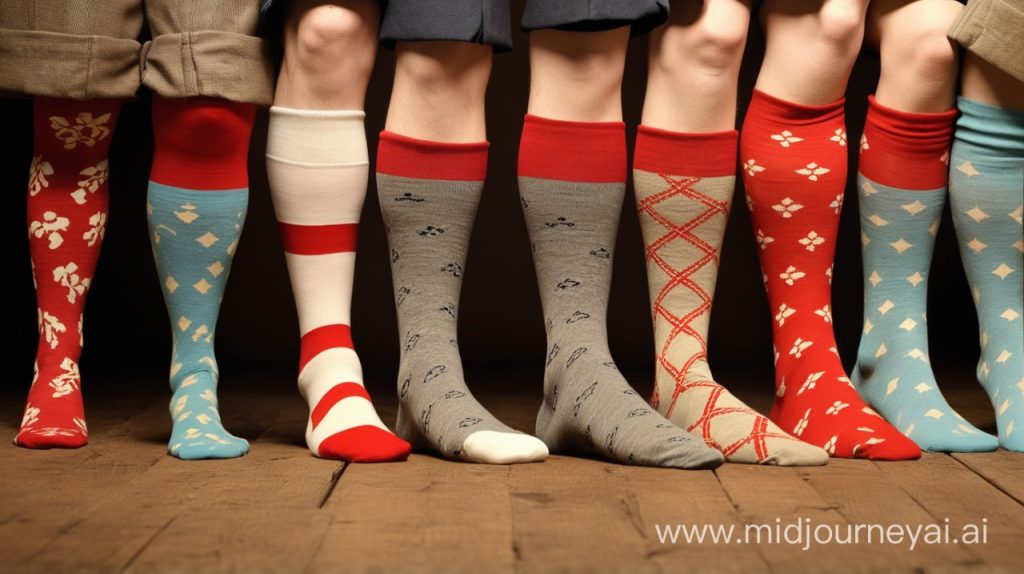
Socks, those often-overlooked accessories tucked away in our shoes, have a rich and fascinating history that spans centuries. From their humble beginnings as simple foot coverings to the fashion statements they’ve become today, the evolution of socks reflects the changing needs and cultural shifts of societies around the world.
The Early Days: Socks in Ancient Civilizations
Socks, or sock-like coverings, have been traced back to ancient times. In Egypt, around the 3rd century AD, early versions of socks were made from animal skins and used to provide warmth in the harsh desert climate. Meanwhile, in ancient Greece, the precursor to socks, known as “piloi,” were made from matted animal hair and worn with sandals.
Medieval Europe: The Rise of Knitted Socks
It wasn’t until the Middle Ages in Europe that knitted socks gained popularity. This shift was largely attributed to the development of knitting techniques, which allowed for more intricate and form-fitting designs. Knitted socks became a status symbol, with intricate patterns and vibrant colors showcasing the wearer’s wealth and social standing.
The Renaissance and the Introduction of the Stocking
During the Renaissance, advancements in textile production and trade led to the widespread availability of silk and cotton. This, in turn, contributed to the popularity of stockings, a more refined and luxurious version of socks, among the European elite. The trend continued to evolve, with stockings becoming an essential part of formal attire.
The Industrial Revolution: Socks for the Masses
The 19th century marked a significant shift in sock production with the advent of the Industrial Revolution. Mass production allowed for socks to be manufactured more efficiently, making them accessible to people of various social classes. The standardization of sizing and the introduction of more affordable materials like cotton contributed to socks becoming a staple in everyday wardrobes.
The 20th Century: Socks as Fashion Statements
As the 20th century unfolded, socks evolved from utilitarian items to fashion statements. The emergence of nylon in the 1930s brought about sheer stockings, a symbol of glamour and femininity. The 1960s and 1970s saw the rise of bold patterns and psychedelic colors, reflecting the vibrant counterculture of the time.
Modern Trends: Beyond Functionality
In the 21st century, socks have transcended their purely functional role and entered the realm of self-expression. From quirky patterns and novelty designs to high-performance athletic socks, the options are limitless. Influencers and fashion-forward individuals use socks as a canvas to showcase their personality, and designer collaborations have elevated socks to coveted fashion accessories.
Conclusion: The Enduring Appeal of Socks
From their modest beginnings in ancient civilizations to their current status as fashion essentials, the history of socks is a testament to the adaptability and creativity of human culture. As we continue to embrace individuality in our fashion choices, it’s clear that socks will remain a canvas for self-expression, connecting us to the diverse and storied history of this often-overlooked accessory. So, the next time you slip on a pair of socks, remember that you’re participating in a tradition that spans centuries—a tradition that continues to evolve with each step we take.